
Across thousands of years of shipbuilding, the ultimate test of craftsmanship was surviving the absolute brutality of the ocean. While saltwater, rot, and intense sun warped and destroyed ordinary timbers, ancient shipwrights discovered one undisputed king of the sea: Teak.
It became the legendary backbone of historic fleets because nature packed it with a dense grain, rich oils, and built-in silica that repel water and marine parasites from the inside out. The British Royal Navy used it. Portuguese traders used it. The greatest vessels of the age of sail were planked in it — not because it looked good, but because it survived when everything else failed.
That ancient maritime secret is exactly why we build with it today.
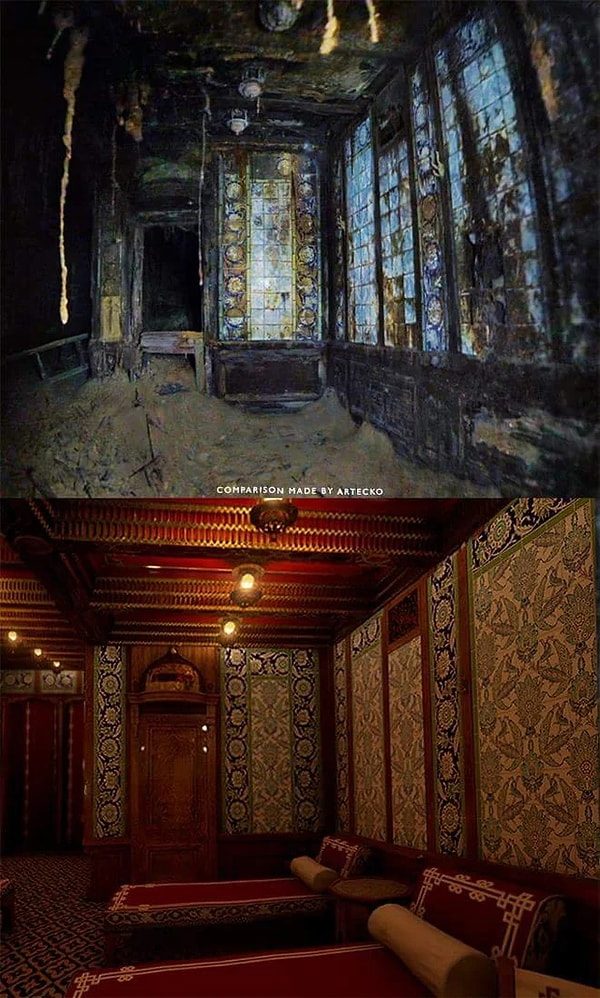
That kind of resilience isn't just a modern observation — the evidence spans well over a thousand years. The Phanom-Surin shipwreck, a 9th-century sewn-plank trading vessel discovered entombed in the mud of a former mangrove swamp in Samut Sakhon, Thailand, is one of the oldest ships ever recovered. Its planks were stitched together with fiber rope and pinned with teak pegs — construction details that survived over a millennium underground before anyone laid eyes on them. The Titanic tells the same story on the opposite end of the timeline: when the wreck's Turkish Baths were rediscovered six decks down in 2005, the carved teak woodwork and recliners were still recognizable, barely touched, in a room where almost everything else had been consumed by the sea. A thousand-year-old sewn hull and a steel liner that sank in 1912 don't have much in common — except the one wood that outlasted both.
What the Wood Actually Does
Because of its unmatched dimensional stability, teak doesn't warp, twist, or split when moving from a baking-hot boat deck to the cold depths of the ocean. The natural oils in the grain act as a built-in preservative — it doesn't need to be sealed, coated, or babied. Left bare, it weathers to a silver-grey. Oiled, it holds deep amber for years.
For a speargun, this translates directly. A straight blank stays straight. The track stays true. The mechanism seats correctly every time because the wood around it hasn't moved. That means a perfectly straight, true track every single shot.
Why Burmese Teak Specifically
Not all teak is equal. Plantation teak, grown fast in monocultures, lacks the density and oil content of old-growth Burmese stock. The slow-grown grain is tighter, the natural oils more concentrated, the wood heavier and harder. It's the difference between a piece of furniture and a tool built to outlast its owner.
Our supply of Burmese teak is limited and will not be replenished. When it's gone, it's gone — and what gets built from it will be the last of its kind. That's not marketing. That's the reality of a timber that the world stopped harvesting decades ago.
We were also the first to advertise on the quality of the Burmese teak we use, and there's a real story behind that, not a slogan. Our stock came through a high-end contracting wood company in Los Angeles, who supplied us with what was, as far as we've been able to verify, the last heavy shipment of genuine Burma teak brought into the U.S. — fully papered, legally imported, shipped more than two decades ago. Since then we've watched other speargun sellers pick up the same language, suddenly advertising "Burmese teak" of their own. We're skeptical, and you should be too. There's a meaningful difference between high-end teak, good-quality teak, and actual old-growth Burma teak — and if a supplier is claiming a fresh or recently-acquired stock of it, that claim almost never holds up. The legitimate export of this wood stopped decades ago for a reason.
I was taught from the start that this wood is in a different category. Every gun we build from it carries five thousand years of seafaring history.
Why We Also Build With Guam Mahogany
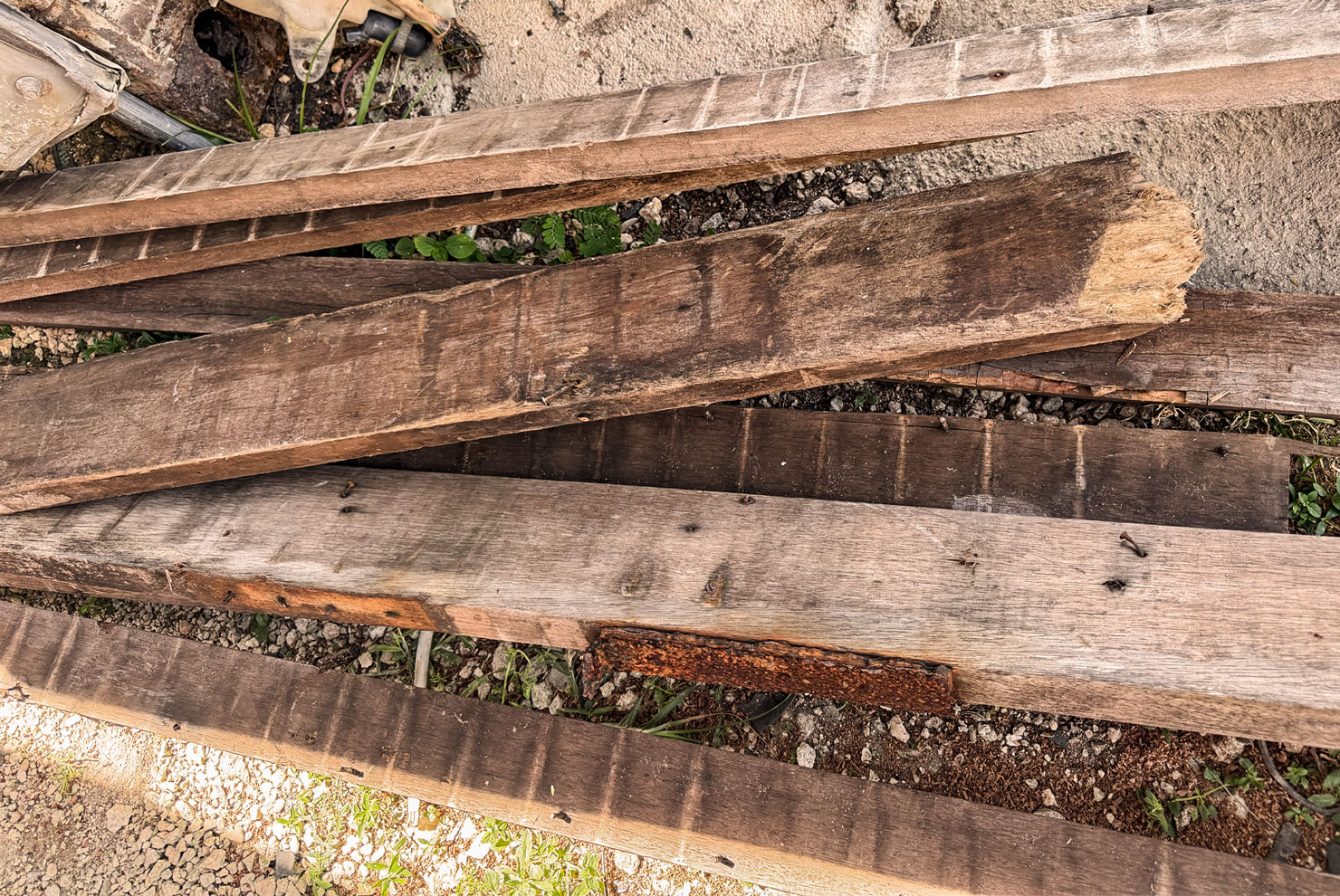
A good number of our guns are shaped from salvaged Guam mahogany — old-growth lumber pulled from houses that are coming down, not cut fresh from any tree standing today. The color runs deeper than anything you'd find at a lumberyard, the grain tighter, the weight different in your hand. It pairs with teak the way it should: one wood built for the ocean, the other carrying the island's history in it.
That mahogany isn't lumberyard stock and it never will be again. What we have is what gets salvaged, one house at a time.
What About Ifit?
This is the question I get most after people learn we build with teak and mahogany: what about ifit? It's a fair one. Ifit is Guam's territorial tree, and for good reason — it's about as tough as wood gets. Intsia bijuga runs roughly 830 kg/m³ in density, termite-resistant, and actually hardens after it's cut. For thousands of years it built canoes, house posts, and tools across the Pacific. It earned its reputation the hard way.

But two things work against it in a speargun. First, supply: mature ifit is genuinely scarce on Guam today. It's slow-growing, it's been logged for generations, and what's left standing is mostly young second-growth — there isn't a real harvestable stock of old ifit the way there once was. Second, and just as important: the density that makes ifit nearly indestructible as a house post works against it as a speargun blank. A gun needs to flex slightly under load and absorb shock through the barrel without fracturing. Ifit's extreme hardness makes it brittle and unforgiving when you mill it down that thin — it doesn't want to bend, it wants to crack. The same density that survives a typhoon doesn't survive being shaped into a 3-foot blank designed to flex.
There's also the matter of buoyancy. Ifit's density — around 830 kg/m³ — runs well above the teak and mahogany we build with, and wood that dense carries almost none of the natural lift those species have in the water. Soak it, and it sinks rather than floats. A speargun shaped from it loses the balanced, buoyant feel you get from teak or mahogany — another quiet reason it doesn't make the jump from legendary timber to ideal speargun material.
Ifit is a legendary wood beyond comparison. It's just not as ideal for a speargun.
The Truth About "Guam Mahogany"
Here's the part most people don't know: the old-growth "mahogany" sitting in Guam's older homes isn't actually a Guam native tree, and it isn't true mahogany either. It's Philippine mahogany — a loose trade name for several Southeast Asian hardwood species (lauan among them) that were shipped out to places like Guam decades ago as a construction and plantation timber, the same way it was sent to Hawaii, Fiji, and beyond. It went into the building boom that put up homes across the island through the 1950s, '60s, '70s, and '80s, which is exactly where most of what we salvage comes from — beams, joists, and framing pulled out of houses from that era as they're torn down.
The reason that wood matters now is that the original supply is gone. The old-growth lauan stock that earned the "Philippine mahogany" name was logged out across the Philippines and Southeast Asia decades ago. What gets sold under that name today is a different, lesser wood entirely. So the only real old-growth Philippine mahogany left in our hands is literally what's still standing inside houses built two, three, four generations ago. Once those come down, that's it.