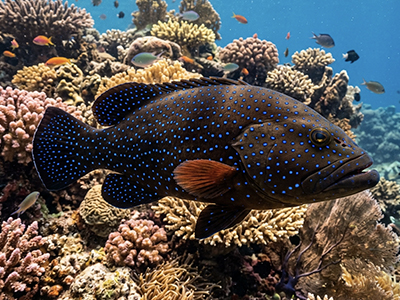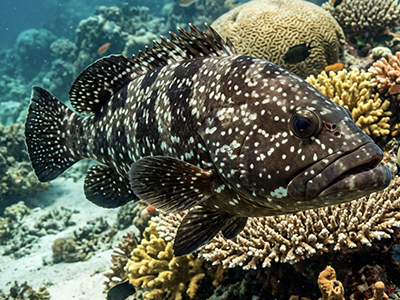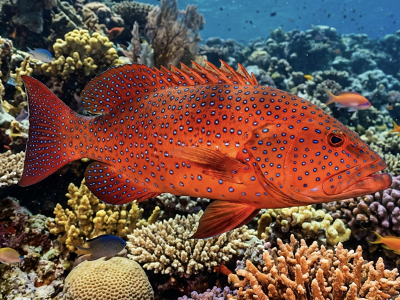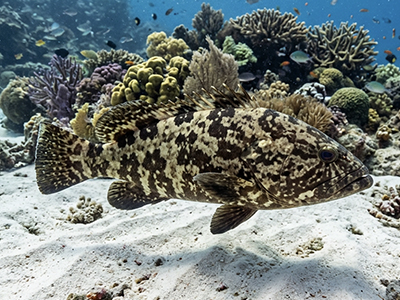
There's a story most fishermen on this island know, even if they don't tell it out loud. Someone's uncle. A neighbor. A cousin who came back from a day on the water, ate what he caught, and woke up in the night thinking the bedsheet was on fire — except the sheet was cold. He touched a glass of ice water and felt burning. He touched his own face and felt electric. The doctors called it ciguatera. His family had never heard that word before.
It wasn't the last time.
You Can't See It, Smell It, or Cook It Away
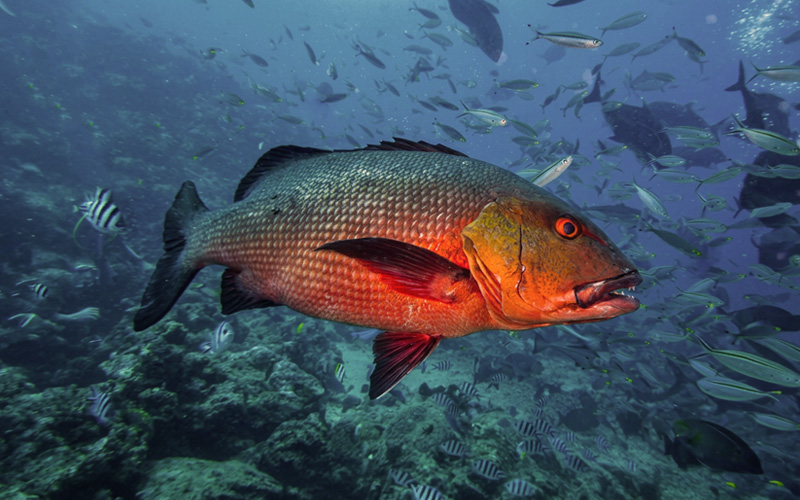
Ciguatera fish poisoning is caused by a toxin called ciguatoxin — CTX — produced by a microscopic alga called Gambierdiscus toxicus that grows on dead coral and algal mats along our reefs. Small herbivorous fish eat the algae. Larger fish eat those fish. The toxin doesn't break down — it builds up, concentrating as it moves up the food chain. By the time it reaches a big Tagåfi' (bohar snapper) or an old Gådao (grouper), it can be present at levels far beyond what's safe to eat.
And you will never know it's there.
It has no taste. No smell. It doesn't change the color or texture of the flesh. It survives freezing. It survives cooking. It survives smoking and marinating and everything else we do to fish before we put it on the table. There is no test you can run at home. There is no test a fishmonger can run at the dock. Right now, ciguatoxin can only be detected in a specialized laboratory — and by the time that matters, someone is already sick.
The symptoms are unlike almost anything else. Neurological effects that can last weeks or months. A reversal of hot and cold sensation — cold water feels like it's scalding you — that people who've experienced it describe as impossible to explain to someone who hasn't. Tingling that moves through your hands and feet. Itching so intense it keeps you from sleeping. Nausea, vomiting, and diarrhea first, then the nerve effects, and in serious cases, heart rhythm problems. No cure. No antidote. Treatment is supportive — meaning doctors manage your symptoms and wait.
And it can come back. Alcohol can trigger a relapse. So can chicken, pork, and nuts. Some people deal with recurring neurological effects for months. Some for years.
The Numbers Behind the Problem
We pulled together the best available regional data, and the picture is sobering.
Across the Pacific Island Countries and Territories, the mean annual incidence of ciguatera went from 104 cases per 100,000 people in the 1973–1983 period to 194 per 100,000 in the 1998–2008 period — a 60% increase in a single generation. Researchers estimate that 500,000 Pacific Islanders may have experienced ciguatera over the last 35 years. A lifetime prevalence of 25% in some high-incidence areas.
But here's what makes those numbers feel almost abstract: only 2 to 10% of cases are ever reported to health authorities. In Guam, where people are more likely to treat fish poisoning at home, see a private doctor, or simply tough it out, that percentage may be even lower. The real number of people on this island who have been poisoned by the fish they caught is almost certainly much higher than any official record shows.
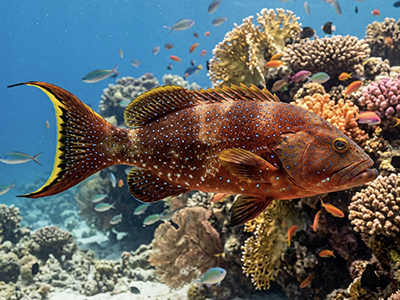
A 2022 study from the Republic of Kiribati — a nation sharing the same Indo-Pacific reef system and many of the same fish species we have here — found that 74.5% of grouper and snapper tested positive for ciguatoxin above the safety threshold. The most toxic individual fish in the study, a white-spotted grouper, registered at 53 times the safe limit. The same species — what we call Gådao — lives on our reefs right now.
The Fish to Know By Name
This is where it gets specific, and where knowing our Chamorro fish names matters more than ever.
The highest-risk species on Guam's reefs are the ones we've always prized most: large, predatory fish that sit at the top of the food chain. They're the best eating, the best fight, and the biggest risk.
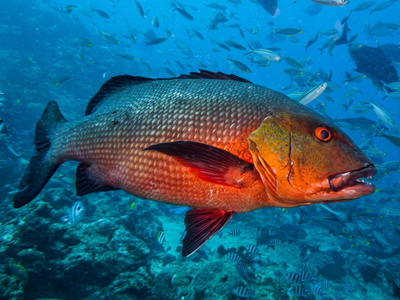
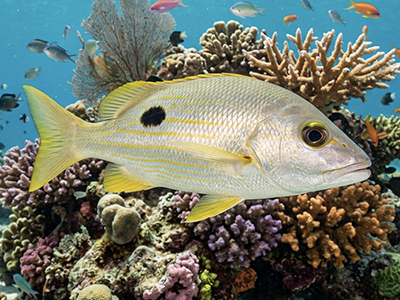
Tagåfi' — the bohar snapper (Lutjanus bohar) — is confirmed as one of the most common ciguatera vectors throughout the entire Indo-Pacific. Beautiful fish. Hard fighter. Known carrier.
Gådao Måslos — the peacock grouper (Cephalopholis argus) — is the most frequently implicated species in Hawaii ciguatera cases and is abundant on Guam reefs.
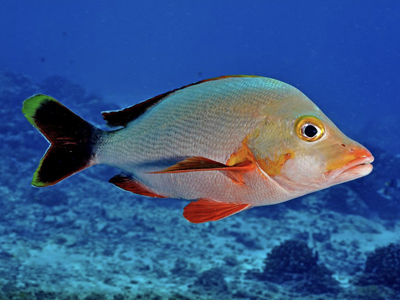
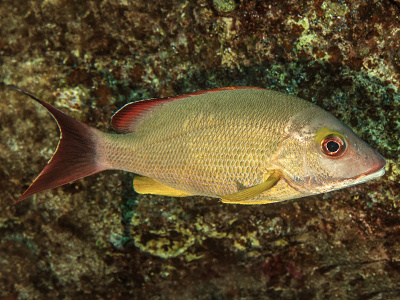
Fafa'et — the humpback snapper (Lutjanus gibbus) — elevated toxin levels confirmed across multiple Pacific studies.
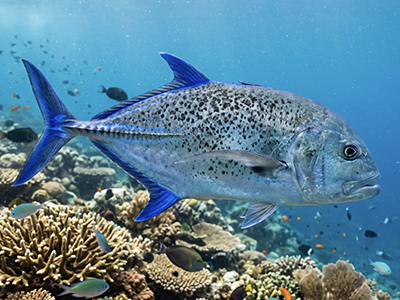
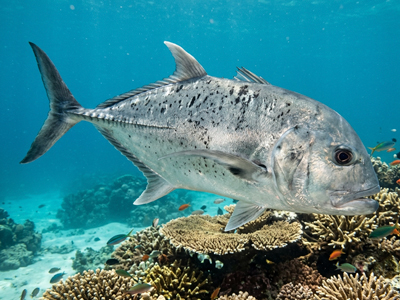
Mamulan — large jacks — accumulate toxin as they grow. The bigger the fish, the more it's eaten, and the more toxin it's likely stored.
These aren't warnings to stop fishing. They're reasons to fish smart. Know which fish you're targeting. Know where it came from. Know the reef it was living on. And know that the organs — the head, the liver, the roe — concentrate the most toxin of all.
Why the Reef Is Part of This
Ciguatera doesn't come from nowhere. Gambierdiscus — the alga at the root of it — thrives on bare substrate. When a coral reef bleaches and dies, when a typhoon strips it, when a construction project stirs up sediment and silts over living coral — the dead material left behind becomes habitat. The alga blooms. More fish eat it. More toxin enters the food web.
Every reef that dies is a reef that becomes more dangerous to eat from.
This connects to something bigger than public health advisories. The health of our reef and the safety of our table are the same thing. Protecting the ocean isn't separate from protecting the people who depend on it — it's the same act, viewed from two directions.
The Chamorro people have fished these waters for thousands of years. That relationship didn't survive colonization, typhoons, war, and development because our ancestors were reckless. It survived because fishing knowledge was passed down carefully — what to take, what to leave, what to know before you eat what you catch.
Ciguatera is one of those things you had to know. It still is.
What You Can Do
The practical list is short because the options are limited — and that's worth being honest about.
Avoid large predatory reef fish from areas with known reef damage or ciguatera history. The bigger and older the fish, the more it may have accumulated.
Never eat the head, liver, or roe of any large reef fish — Gådao, Tagåfi', Tarakitu. Even if the flesh is lower risk, the organs concentrate toxin.
Choose pelagic fish when you want to eat without worry — mahimahi, yellowfin tuna, wahoo, skipjack. These fish don't feed on reef fish and carry far lower risk.
Report it. If you or someone in your family gets sick after eating reef fish, go to the ER and tell them what you ate. Report to Guam DPHSS. Every reported case helps build the picture of where the risk is and who it's affecting.
Talk about it. The biggest reason ciguatera stays invisible is that people don't talk about it — they don't want to scare off buyers, or they're embarrassed, or they just didn't know what hit them. Sharing this information isn't alarmism. It's the same thing a good fisherman has always done: pass on what the ocean taught you.